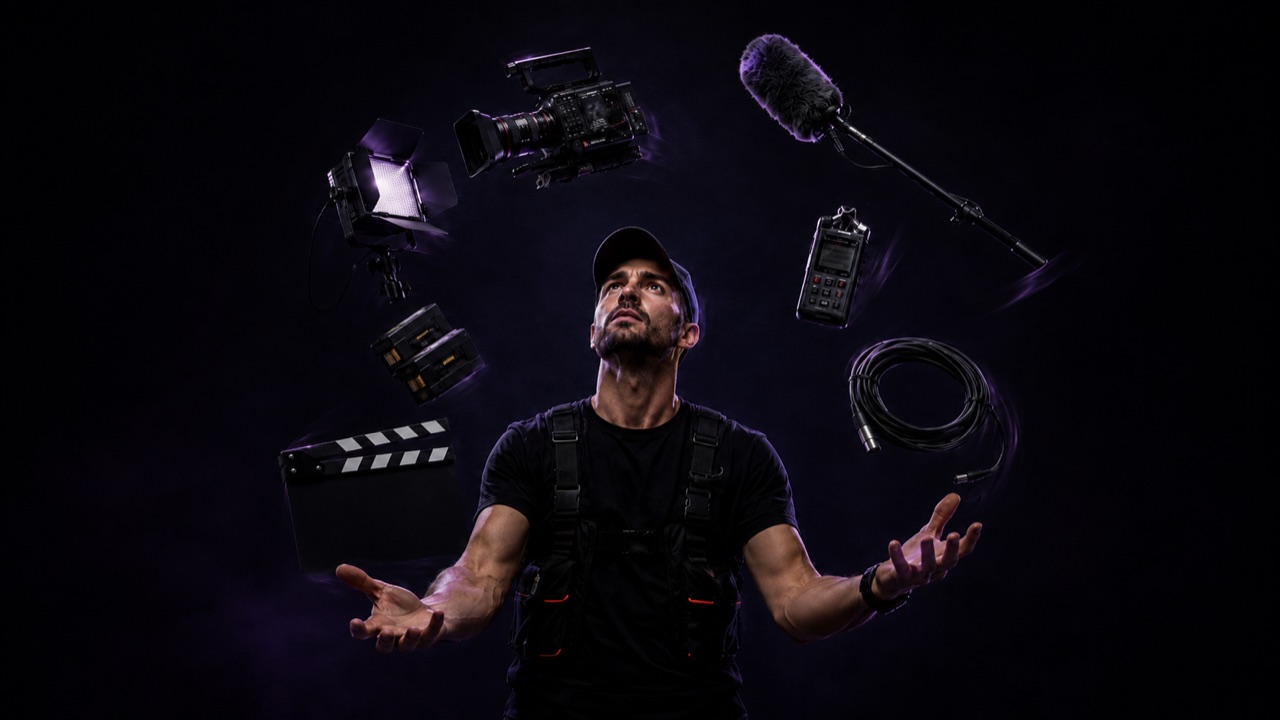
Loading one person up with camera, audio, and lighting is cheaper. It also raises the odds that something gets missed, and it's usually not the picture.
Every production conversation eventually gets to the same question: can one person handle camera, audio, and lighting themselves? It is a fair question, and the honest answer starts with a concession most production companies are reluctant to make out loud: yes, it is cheaper. A single operator costs less than a full crew, and there is no getting around that math.
We do it often at Cloud Gate, because there are people capable of running camera, audio, lighting, and even graphics well enough to deliver a finished product a client is happy with. But "capable" and "without compromise" are not the same thing, and pretending otherwise does not do anyone a favor.
The compromise nobody notices until it's too late
Say the director of photography is also running audio. That is a common setup, and it can absolutely work. But attention is a finite resource, and when one person is watching the frame, adjusting exposure, and also monitoring levels, something is more likely to get missed. And it usually is not the picture. It is usually the audio, because clean audio is that important to how a finished piece actually gets perceived. We have written before about why audio is the first thing that signals production value: it is the thing viewers forgive least and notice first, which makes it exactly the wrong place to introduce split attention.
Everything one person is actually being asked to track
On a lean crew, one person on set is often responsible for some combination of:
- Lighting the space, and adjusting it as the day moves
- Setting and monitoring multiple cameras during an interview, which is most of the time on a typical shoot
- Prepping and mic'ing the subject
- Running audio levels throughout
- Breaking down gear between setups
- Moving locations to pick up b-roll
Any one of those, done well, takes real attention. All of them, done by one person at once, is less a job description and more a balancing act: a juggler on a unicycle, balancing a plate on a pole on their chin, while tracking three pins in the air. It is not that it cannot be done. Some people are genuinely good at it. It is that the more balls in the air, the higher the odds that something drops, even for the best multitasker on the call sheet.
The savings math usually does not hold up
Here is the part worth sitting with before defaulting to the lean setup to save money: what you save by loading one person up with every role is often a small number next to what a dedicated audio operator, a second camera operator or AC, a gaffer, or a field producer actually costs. Those roles exist to remove the split-focus problem entirely, not because production companies like padding a crew list. Weigh the marginal cost of adding one of those roles against the marginal risk of a missed shot, muddy audio, or a slower day because one person had to stop and reset between tasks, and the "savings" often are not where you would want to cut first. Our corporate video cost guide breaks down where crew costs actually go if you are weighing this against other places to trim budget.
This isn't an argument against lean crews
None of this means a smaller crew is the wrong call. Plenty of projects are right-sized with a lean team, and Cloud Gate builds plenty of productions that way. The point is narrower: know what you are trading, not just what you are saving. A lean crew that is planned around its limits, fewer setups, more time per shot, one clear priority per person, can work well. A lean crew asked to do everything a full crew does, just with fewer hands, is where the compromises start showing up on screen. Good pre-production is exactly where that distinction gets made, before anyone shows up on set.
Final thought
Hiring one person to do four jobs will always look cheaper on a quote. Whether it is actually cheaper depends on what you are willing to risk missing, and how much that miss would cost you if it shows up in the final cut. The honest answer is not "always hire more people." It is "know exactly what you are asking one person to hold at once, and decide on purpose, not by default."
Not sure whether your next shoot needs a lean crew or a few more hands? Contact Cloud Gate Productions and we'll help you figure out the right footprint for what the day actually requires.