The event gets months of planning. The video gets a line item at the end. That ordering quietly shortchanges the one asset that outlives the day itself.
Here is a pattern we see over and over: a team spends months planning an event or a campaign. The venue, the staging, the messaging, the guest experience, the run of show. Every variable gets weighed, debated, and refined. And then, somewhere near the end of the process, someone says "we should probably get this on video," and capture gets bolted on as a line item.
Why is that the default? Why is video an afterthought in the planning of the very things it exists to preserve?
It is worth asking, because when the day finally arrives, the video quietly becomes three things at once:
- The most indelible memory of the day. Long after the venue is struck and the attendees go home, the video is what people will actually re-experience.
- The most accurate record of what you pulled off. Not the deck you pitched, not the recap email. The footage is the proof of what the event actually was.
- A single day of capture that can feed everything downstream. Expert testimonials, customer and fan reactions, social recaps, internal highlight reels, recruiting material. One capture day, added to a budget you have already committed, can yield whatever you need from it.
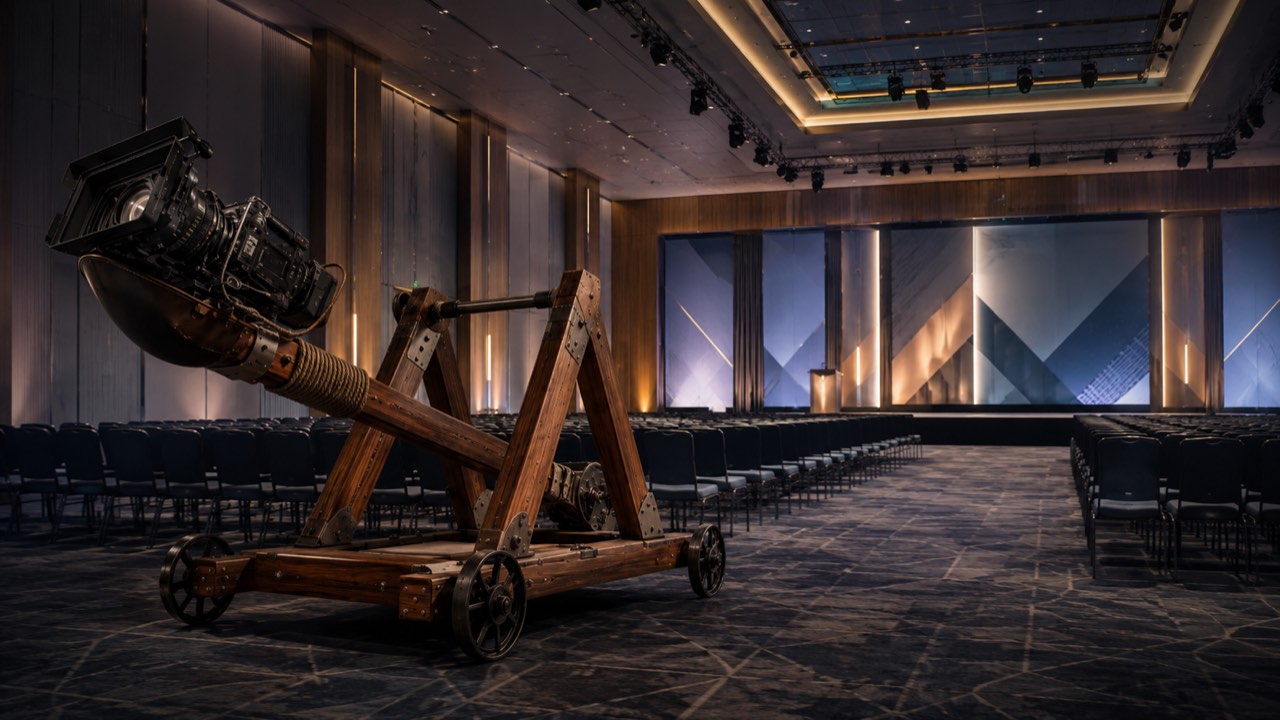
And here is the part that makes the afterthought habit so strange: by the time the cameras arrive, all the hard work is done. The set is already built. The audience is already assembled. The attention is already on you. The catapult is built and loaded. Capturing it well is just pulling the lever.
The question that should be in the room from day one
The fix is not a bigger video budget. It is a planning habit: "what will this look like on video?" deserves a seat next to the other foundational questions you are already weighing, like what experiential impact the event will have and what message it needs to land. Not as a line item at the end, but as one of the variables shaping decisions as they get made.
That one question, asked early, changes small things that cost nothing at planning time and are unfixable on the day. Where the stage sits relative to the light. Whether there is a spot where interviews can happen away from the noise. Whether the run of show leaves any window to grab the CEO for ten minutes. Whether the moments you most want on camera are scheduled at a time the camera can actually be there.
What early actually buys you
The same logic applies to when the production company gets brought in. The sooner that happens, the more the crew can prepare to execute exactly what you need. They can surface questions, flag issues, and identify staffing needs while there is still time to solve them. Often they can pitch ideas that make the overall event better, because they are thinking about the day through a lens nobody else in the room is using.
Here is an honest concession, though: production companies are used to firedrills, and the good ones are genuinely good at them. A reactive, show-up-and-shoot engagement will still get you most of the way there, probably 80 percent of what the crew would want to deliver. Experienced crews know how to walk into an unfamiliar room and find the story.
But the other 20 percent is what actually pushes the work to the next level, and it is exactly the part that differentiates you on social and in the marketplace. That last stretch does not come from better cameras or more hustle on the day. It comes from time: time to develop specific deliverables in advance, so the crew shoots to realize a plan instead of showing up, getting what they can get, and figuring out afterward what can be made from it. The difference between those two modes is the difference between coverage and craft, and it is decided weeks before the event, not on set. It is the same reason pre-production is where production value is won on any shoot, and the same planning discipline covered in our pre-production checklist.
The budget conversation, reframed
Because video gets planned last, it also tends to be the place teams want to cut hardest when the budget tightens. Yet when the finished piece is delivered, it is routinely treated as the most important asset the campaign produced. That mismatch, cutting hardest on the thing you will value most, comes directly from the afterthought habit. If video is in the plan from day one, its budget gets weighed against what it actually returns: a capture day that can feed months of content. Our corporate video cost guide breaks down what that budget actually buys, and our guide to measuring video ROI covers the return side of the equation.
Final thought
Nobody plans an event hoping it will be forgotten. The event is temporary by design; the video is the part that compounds. So treat capture the way you treat every other foundational variable: put "what will this look like on video?" in the room from the first planning meeting, bring your production partner in while the plan can still bend, and let the one day you have already paid to build return everything it is capable of returning. The catapult is built. Pull the lever.
Planning an event or campaign and not sure where video fits yet? Contact Cloud Gate Productions early, while the plan is still taking shape, and we'll help you build the capture around it. You can also explore our video production services or see how this plays out in our corporate work.