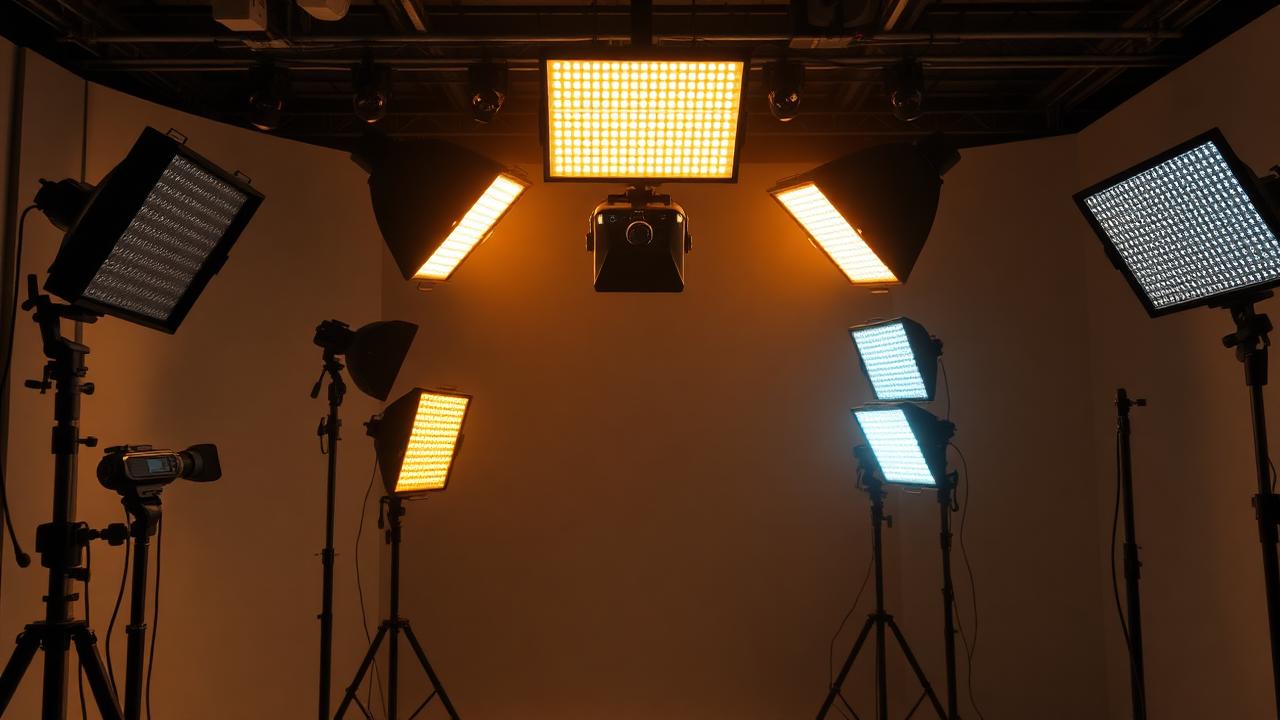
Discover professional lighting techniques that transform ordinary footage into cinematic masterpieces.
Lighting is one of the most powerful tools in a filmmaker's arsenal. The right lighting setup can elevate your production value instantly, transforming ordinary footage into cinematic masterpieces that captivate audiences.
Understanding the fundamentals starts with the three-point lighting system. Your key light provides primary illumination, the fill light softens shadows, and the back light separates your subject from the background. This foundational setup works for interviews, products, and narrative scenes.
Natural light offers beautiful, soft illumination but requires careful planning. The golden hour—shortly after sunrise or before sunset—provides warm, flattering light. Overcast days create natural diffusion, eliminating harsh shadows. Always have reflectors and diffusers to shape natural light to your needs.
Color temperature dramatically affects mood. Tungsten lights (3200K) create warm, intimate atmospheres perfect for cozy interiors. Daylight-balanced lights (5600K) produce neutral, energetic tones ideal for corporate content. LED panels offer adjustable color temperature, providing flexibility on set.
Hard versus soft light creates different emotional effects. Hard light produces defined shadows and dramatic contrast, perfect for tension and energy. Soft light creates gentle gradations and flattering portraits, ideal for interviews and emotional moments.
Practical lights—visible light sources within your frame—add realism and depth. Table lamps, windows, and candles create motivation for your lighting scheme while adding production design value. Balance practicals with your primary lighting to maintain proper exposure.
Advanced techniques like Rembrandt lighting create distinctive looks. This portrait lighting style, characterized by a triangle of light on the shadow side of the face, adds depth and sophistication. Experiment with ratios between key and fill light to develop your signature style.
Remember, lighting serves your story. Horror films use low-key lighting with deep shadows. Comedies favor bright, even illumination. Match your lighting choices to your narrative goals for maximum impact.