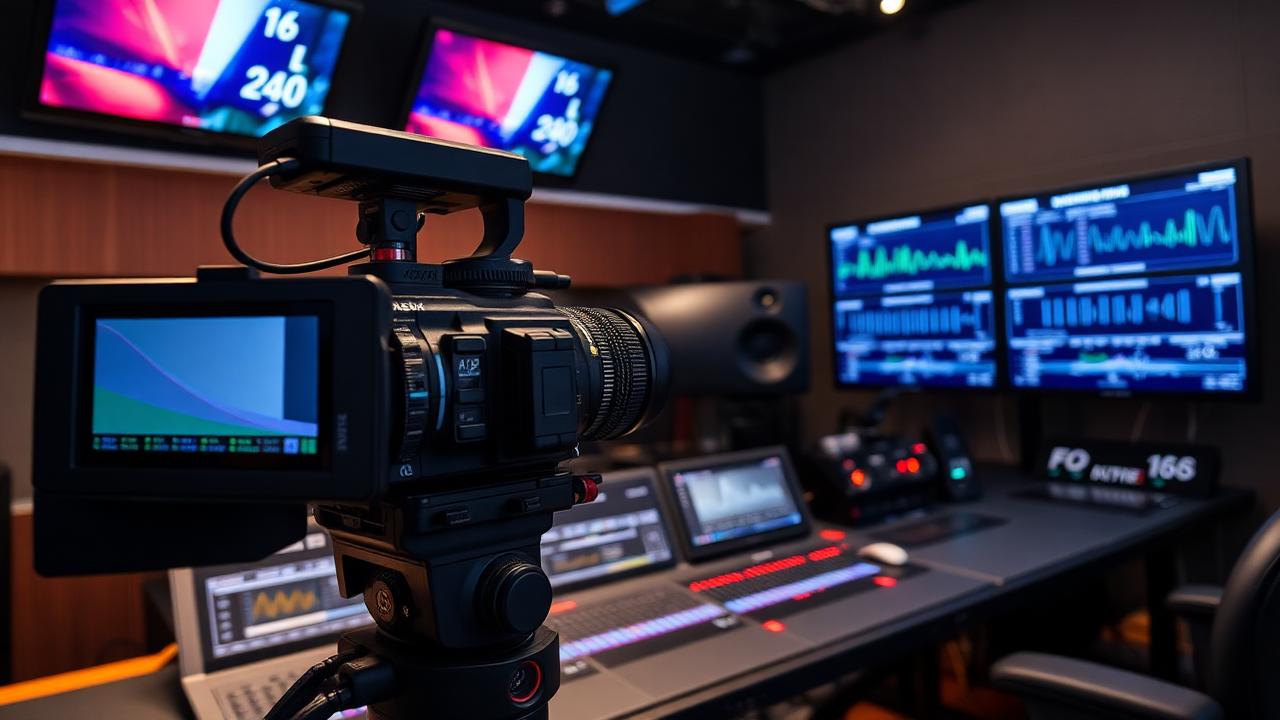
Everything you need to know about technical requirements and quality standards for broadcast television.
Broadcasting requires adherence to strict technical standards. Understanding and meeting these requirements ensures your content airs without issues while maintaining professional quality that viewers expect from television.
Resolution and frame rate form the foundation. Modern broadcast standards require 1920x1080 (HD) minimum, with 4K (3840x2160) increasingly common. Frame rates of 23.976fps for film-look content or 29.97fps for standard video remain industry standards. Always confirm specifications with your broadcast partner.
Color space and bit depth affect image quality significantly. Broadcast typically requires Rec. 709 color space. Ten-bit color depth provides better gradation than eight-bit, reducing banding in gradients. Shoot in log formats when possible, then grade to broadcast specifications.
Audio standards prevent technical rejections. Broadcast requires -23 LUFS for overall loudness with -2dB true peak maximum. Dialog should sit at -24 LUFS. Use limiters to prevent peaks while maintaining dynamic range. Stereo or 5.1 surround sound are standard configurations.
Safe areas prevent crucial content from being cut off. Keep text and important graphics within the action-safe area (90% of frame) and title-safe area (80% of frame). Modern screens vary in overscan, so conservative margins ensure visibility.
File formats and codecs must match delivery specifications. Common broadcast formats include ProRes 422 HQ or DNxHD for mastering. H.264 or H.265 suit digital distribution. Always deliver in the exact format requested by your broadcast partner.
Quality control catches errors before broadcast. Check for technical issues: video artifacts, audio glitches, color inconsistencies, or sync problems. Professional QC includes automated testing plus manual review by experienced technicians.
Closed captioning and descriptive audio expand accessibility while meeting legal requirements. Broadcast content must include accurate closed captions. Premium productions include descriptive audio tracks for visually impaired viewers.
Metadata and paperwork accompany your video file. Broadcaster require program descriptions, runtime, aspect ratio, and content ratings. Music cue sheets document all audio for royalty payments and rights management.